
WERC Global26 Update – Rental Relocation in the US: Market Trends, Renter Expectations, and Employer Support
Meredith Kennedy, CRP, GMS-T
In a recent Redfin article, Rob Carlson, Dwellworks Senior Vice President, Global Operations, shared insights into what renters expect in today’s competitive US rental market. Those expectations have important implications for relocating employees and the employers responsible for helping them move successfully.
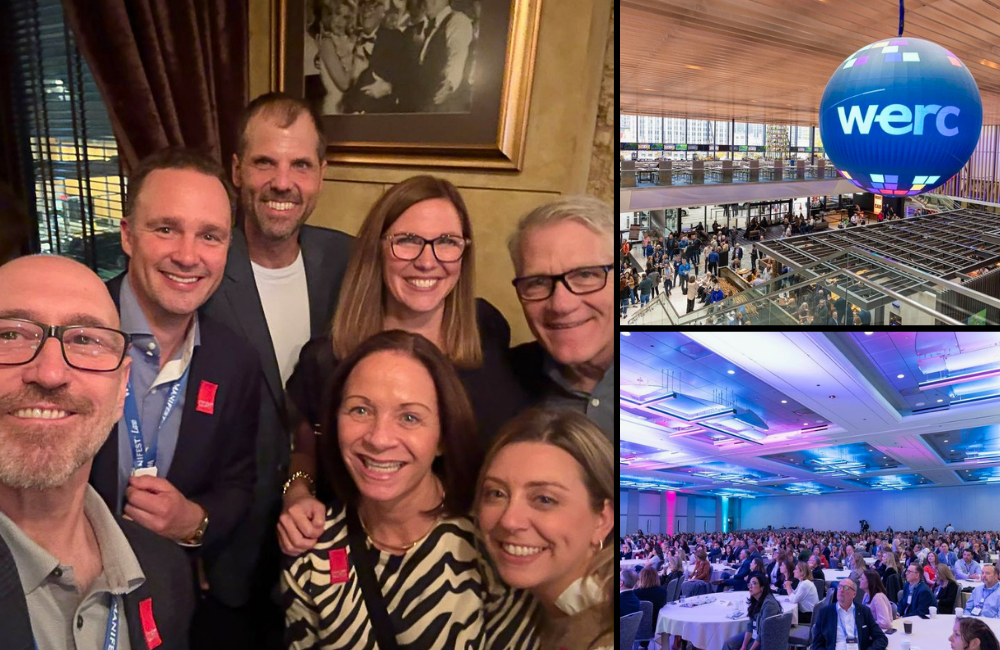
We expanded on that conversation at WERC Global26 in Chicago, where I moderated the session, “Are We Paying Enough Attention to Renters?”, focused on relocating renters and rental assistance, drawing on the expertise of panelists Jack Jampel, Stryker Corporation; Diane Ayres, Porchlight Rental and Destination Services; and Pamela Roman, Station Cities, a Dwellworks real estate brokerage.
In this article and our live discussion at WERC Global26, we examined where relocation activity is increasing, how the corporate renter profile is changing, and which services and policy choices can reduce time, cost, and risk.
Dwellworks is a leading, award-winning provider of rental assistance for employer-sponsored relocations within the United States, earning the highest scores in the 2026 Nationwide Survey of Transferring Employees published by Trippel Survey and Research. Our teams support renters across all 50 states and have consistently earned strong service scores from clients and relocating employees. That experience informs our perspective on today’s rental markets and the support employees need to make successful housing decisions.
Why Are Renters a Strategic Priority in Corporate Relocation?
Renters account for approximately 35% of the US housing population and over 55% of the corporate relocation population, according to multiple industry sources, including the recently published 2026 Atlas Corporate Relocation Survey.
During our panel discussion last month, I provided additional context that according to the US Census Bureau, 63.5% of US households headed by someone 35 or younger are renters. We also know from Bureau of Labor Statistics data that 44.9% of the working population in the US are between the ages of 25 and 44. Given the overlay of employment demographics with the number of rental households, it’s reasonable to assume most corporate employees, many of whom are also desirable candidates for relocation and growth opportunities, are also renters.
This presence makes renter support a strategic talent mobility issue that should not be seen as a secondary benefit offered on a limited basis to an incidental population.
Where Is Rental Relocation Activity Growing?
More than 3 million people in the United States move for work-related reasons each year. Within that broader population, some professionals and their families move at an employer’s request and receive relocation benefits that may include rental-search and destination support.
Dwellworks data from the past 12 months point to three trends in employer-sponsored rental relocation. First, US-to-US move activity across our client portfolio has increased by more than 25%. Second, technology, finance, and manufacturing sectors, particularly aerospace and advanced technology, generated the largest volumes, with New York City, San Francisco/San Jose, and Seattle among the leading inbound markets. Third, rental relocation also grew rapidly in resurgent manufacturing and industry-specific hubs, including St. Louis, Florida’s Space Coast, Chicago, Detroit, and Cincinnati. Together, these trends show that employer-supported renters are increasing in number and moving to a wider range of destinations. In the last 12 months, Dwellworks moved renters into 370 unique US markets. The increased diversification of relocation destinations is demonstrated further in the fact that we assisted 5 or fewer employees in 226 of those markets.
On the supply side, the national rental vacancy rate was 7.0% in September 2026, according to US Census Bureau data, but national averages do not reflect conditions in highly competitive destination markets. Vacancy rates are below 3% in New York and San Francisco as well as in neighborhoods preferred by relocating professionals in destinations like Midtown Detroit and Boston. Employers, therefore, face some of the greatest housing availability and cost challenges in the same locations where they most need talent to relocate and quickly begin to make meaningful contributions.
The Evolving Profile of the Corporate Renter
At WERC Global26, Diane Ayres, President and CEO of Porchlight Rental and Destination Services, made the point that corporate relocation policies have historically emphasized benefits for homeowners transferring for work. Renters were often treated as a secondary population, typically assumed to be recent college graduates with limited support needs. Many received a modest cash allowance, the traditional “a buck and a truck” benefit, and were expected to manage their moves independently. Additionally, the cost of supporting any limited services for renters was expected to be delivered at zero or low fees by real estate agents who were supporting home sale and home purchase programs.
Today, renters represent the largest cohort of US domestic corporate relocations, and they no longer fit a single early-career profile. A relocating renter may be a “serial mover” who expects several career-related moves and views homeownership as a constraint rather than a benefit. Another profile may be a specialist or senior leader who plans to return to their origin location after an assignment. Others are high-income renters by choice who manage their investments differently but expect relocation support comparable to that provided to homeowner peers. Policies designed around an outdated renter profile can therefore underserve employees at every career level.
What Support do Relocating Renters Need?
Successful rental assistance programs combine realistic housing budgets, local market guidance, validated property and lease support, and policies that reflect the needs of renters at every career level. As Pamela Roman, Managing Broker for Station Cities, a Dwellworks real estate brokerage servicing the New York Tri-State area, noted, across these markets, renters need the same area orientation, neighborhood guidance, and property-search support as relocating homeowners. In highly competitive markets, they may need even more assistance because suitable properties move quickly, and decisions must often be made within compressed time frames.
Online property search is now standard practice, and many relocating employees begin their move process by sharing properties they have already found or received through referrals or unvetted searches. Their challenge is not access to listings but limited time and limited local expertise to complete their home search successfully. A data scientist moving to San Francisco and earning $250,000 a year may understand the demands of the role they are accepting but not know the city block by block. In markets like New York City, where the laws regarding who pays for which broker fee are explicit but complicated, a tenant broker advocate is essential both for sourcing and for fiduciary accountability.
Without informed support, employees may accept unfamiliar lease terms, compete inefficiently for popular properties, or send funds to an unverified owner. As Roman noted, fraudulent listings and demands for payment have unfortunately grown with the value and size of the rental market in many locations. These outcomes create avoidable risks for the employee and potential duty-of-care concerns for the employer.
Online resources and AI tools can help employees gather general market information, compare neighborhoods, and prepare questions. They cannot fully replace local, final-mile rental expertise: validating properties and providers, interpreting market-specific practices, setting realistic expectations, and helping an employee act quickly. That combination of digital preparation and local guidance can save time, reduce risk, and improve housing outcomes.
How Should Employers Update Rental Relocation Policies?
Jack Jampel, Senior Manager, Global Mobility at Stryker Corporation, is a talent mobility expert with decades of experience. The perspective he shared in our WERC Global26 session was that professional rental assistance was a “no brainer” and the incremental costs of professional support from qualified agents and destination service providers were a rounding error of expense, both in terms of total relocation-related costs and in terms of the positive offset in employee productivity and relocation satisfaction. He pointed out the average productivity savings of $5,000 gained from less employee time spent searching listings and chasing landlord meetings generated a positive ROI on the transactional costs of professional support.
This perspective reflects the evolution in relocation policies to address both the challenges of sourcing housing in low-inventory markets and the support needs of high-value professionals who are tasked with delivering results on arrival.
Some corporate relocation policies still provide only a lump-sum benefit, leaving employees to manage their moves independently. Other programs include defined rental assistance services. Within the programs Dwellworks supports, rental assistance fees typically represent about 3% of the total relocation benefit cost. That relatively small expense can help protect a larger investment by reducing housing search delays, avoidable costs, and exposure to fraud and other risks that can affect employee retention and productivity.
Our Takeaways from WERC Global26
By a show of hands, we estimated that about 30% of the attendees at our “Are We Paying Enough Attention to Renters?” session in October were corporate mobility program managers. Their engagement with the content and our panel confirmed the timeliness and relevance of this topic. The three key lessons we shared were:
- Rental homefinding support should be a core relocation benefit.
- Exceptional service must combine duty of care with a personal touch.
- Relocating renters deserve the same expert home search support as homeowners.
Renters make up the current and emerging management talent base of employers. Paying attention to relocating renters is paying attention to the success of the business.
Dwellworks supports employers with rental market research and rental assistance programs in all 50 states. To discuss your renter population, current policy, or priority destination markets, contact me at Meredith.Kennedy@dwellworks.com.
About Dwellworks
Dwellworks is the world’s leading provider of accommodation and acclimation support services for the mobile workforce. We specialize in global destination services and intercultural training, as well as property management and real estate services in key US markets.
Dwellworks provides global home-search and settling-in support for the mobile corporate workforce and business travelers. Services include destination support, intercultural training, property management, and real estate services in key US markets.
Through Dwellworks and Station Cities, clients receive broad market coverage, local expertise, technology-enabled service, and personalized support across hundreds of locations worldwide.
Dwellworks has been recognized by the Trippel Survey and Report as the highest-performing destination-services and US rental-services provider for four consecutive years. We combine operational excellence, innovation, and global compliance in data security, financial management, duty of care, and sustainability to help employees and families transition smoothly and thrive in new locations.
For more information, please visit our company brands at Dwellworks.com and StationCities.com.